Devlog #18 — A bridge every five minutes, the illustrated map and armor that defends
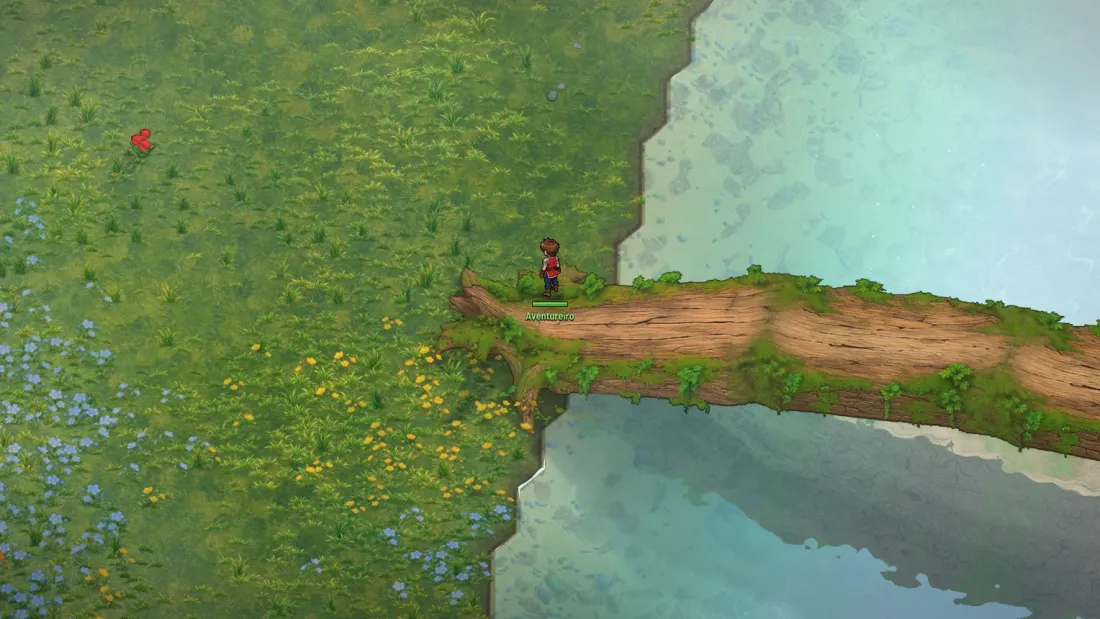
Since Devlog #17 there have been four updates (on the nights of October 19 and 20, and two on the 21st) — and a good part of them came from things you told us on Discord and through F9. Everything already arrives through the launcher.
Rivers: a bridge at most five minutes away
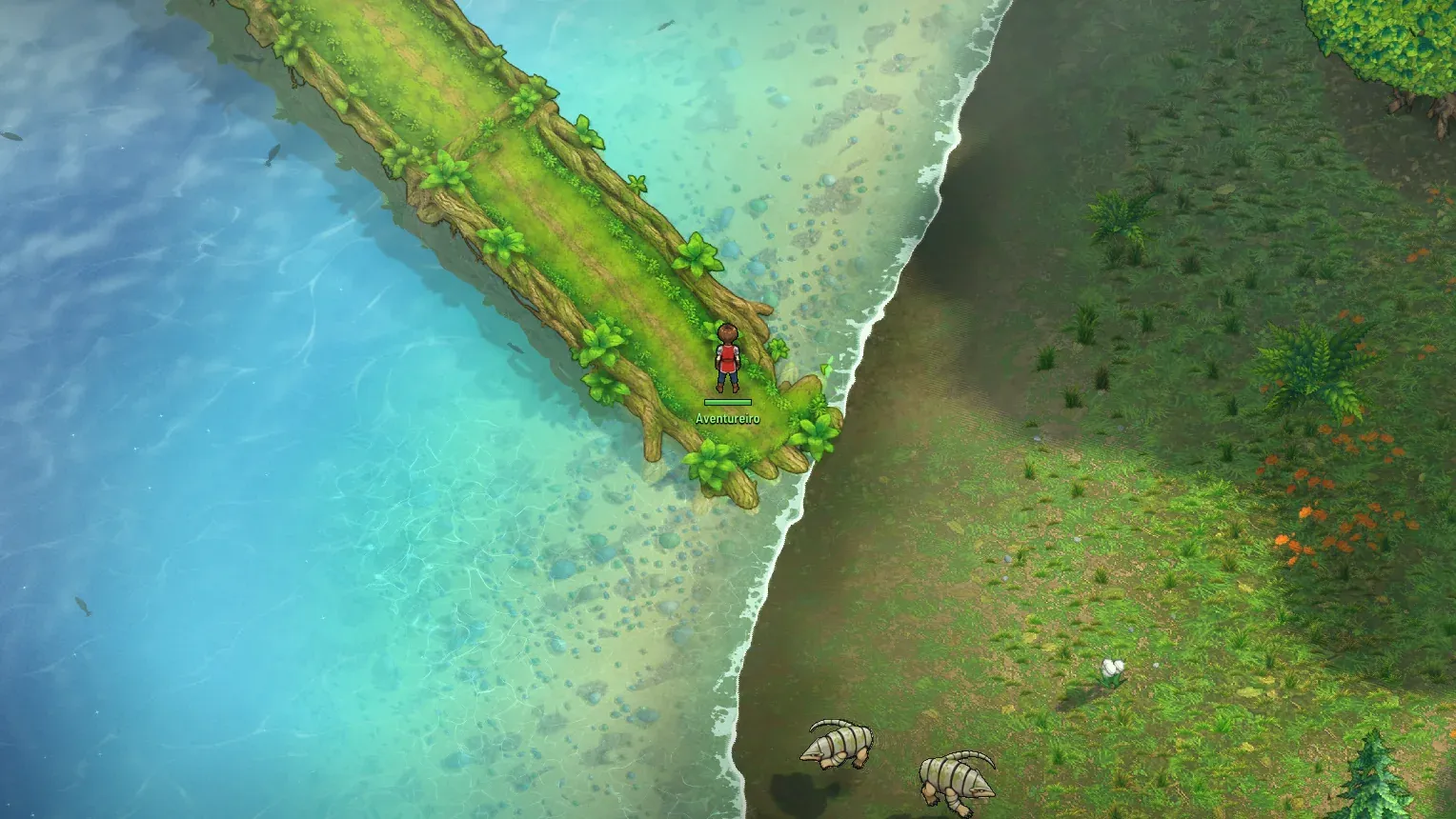
You told us some rivers had no bridge and people were walking a long way to get across. Now, from any bank, the other side is at most a five-minute walk away: there are more than 2,100 bridges on the map, and our test walked across every one of them, both ways, before release.
- The natural bridges: the fallen log, the living roots and the stone arch, sized to the river, with an abutment on each bank and spans in between. Every high bridge is made of stone.
- The seams between the bridge pieces are now continuous (the update of the night of the 21st).
- Where a lake blocks the way, the bridge crosses at the narrows.
The illustrated map
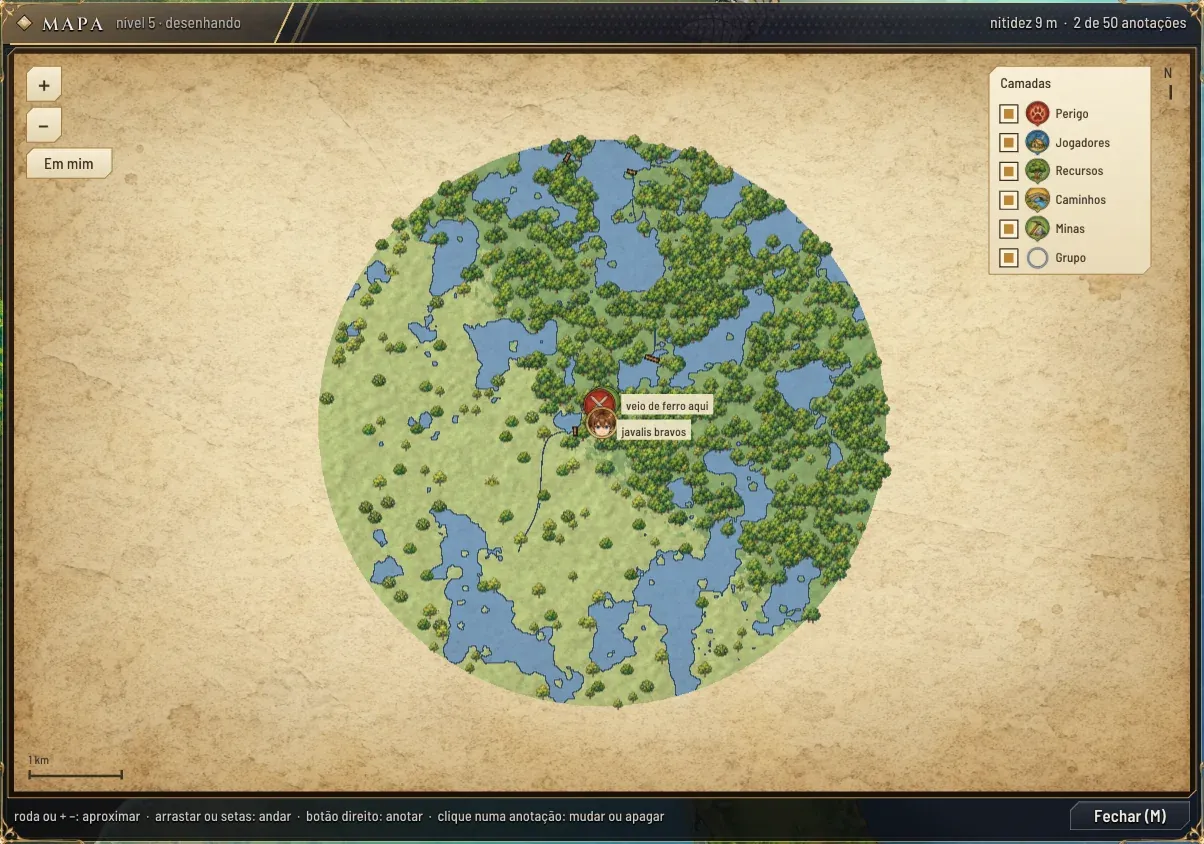
The map you carry is now a watercolor painting that draws itself as you explore:
- Each biome has its own drawings: trees are shaped like trees, mountains like mountains, desert like desert.
- You show up as your own face, in a medallion, instead of the big icon from before.
- Your party shows up on the map, wherever they are, and the mines appear on their own.
- 21 markers to annotate the map (there were 6), on top of the text notes, which work as before.
- Zoom and drag: you can zoom in and move the view.
And the map is still an item: whoever picks up yours reads everything you drew.
Armor now defends
Until now armor barely existed: it had no recipe and gave no defense. Now:
- The Merchant crafts the four pieces: the leather hood (2 leather), the leather jerkin (4 leather) and the light boots (2 leather) at the workbench, and the iron helm (2 iron bars and 1 leather) at the forge.
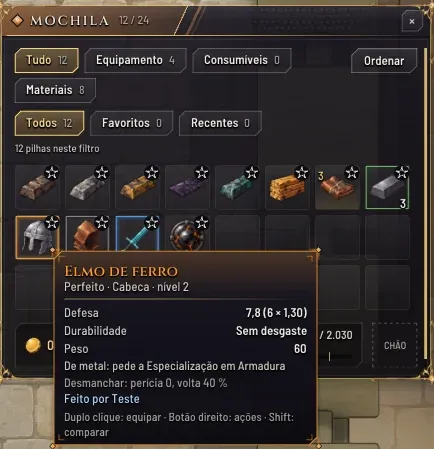
- Defense follows the classic rules for a piece of the same weight: hood 2, jerkin 4, boots 1, helm 6. Hood, jerkin, boots and an iron buckler together take 11% off every hit.
- Quality counts for defense, as it already did for damage: from ×0.8 (poorly made) to ×1.3 (perfect), on armor and shields.
- The color of the equipment shows its material (wood, iron, silver, gold, obsidian, adamantine), and the item card shows the whole math: on a perfect helm, “Defense 7.8 (6 × 1.30)”.
Evil wears its gear by the same rules.
Crafting: refining can fail, and skill goes up to 100
- Refining can fail. Bars, plates, ingots, planks and leather now have a chance to go wrong, and the more you practice, the less you fail. A failure uses up the materials and gives you a failed piece (a failed iron bar, a cracked plank, spoiled leather) that no recipe accepts — but Dismantle Item gives back part of its ore. Iron succeeds about 50% of the time for a beginner; a master almost always succeeds.
- Skill is now per item type, from 1 to 100. The more swords you make, the better you get at swords — in any material. Each weapon model, the jerkin, the hood, the pickaxe: each has its own skill (104 of them). The curve is the same as mining and woodcutting.
- Better material gives more experience: a piece pays by the amount and the level of the material used — an adamantine sword teaches far more than a wooden one.
Woodcutting: the tree moves
- Once cut, it is gone from that spot and, after its regrowth time, a new one grows somewhere random 300 m to 1.5 km away — never in a clearing, always near the woods. If you want rare wood, you have to look for it; so does Evil.
- The ten collectible trees, one per biome, are in the game — including the bone hand of the Land of the Dead.
- The Merchant and the Mage chop with their own animation, axe in both hands, and the hits follow the rhythm of the animation.
Cities: seven tiers, and every log has a use
The castle now goes up in seven tiers: wood, stone, iron, silver, gold, obsidian and adamantite.
- Stone in every tier, more each time (from 100 to 2,500): a quarry never loses its value.
- Logs T2 to T10 are now part of construction: each tier asks for its own range of logs and half of the previous tier’s. Forty heartwood logs are an afternoon of woodcutting; four infernal logs, a guild expedition.
- Workbenches go up the same way, at a fifth of the cost. Existing cities keep the level they are at.
Characters and animations
- The Mage mines, like the Adventurer and the Merchant.
- The Ranger got its own art and a new run, with hair that moves.
- In the back view (the upward diagonal), the Mage and the Merchant look where their body turns, like the Adventurer.
The world
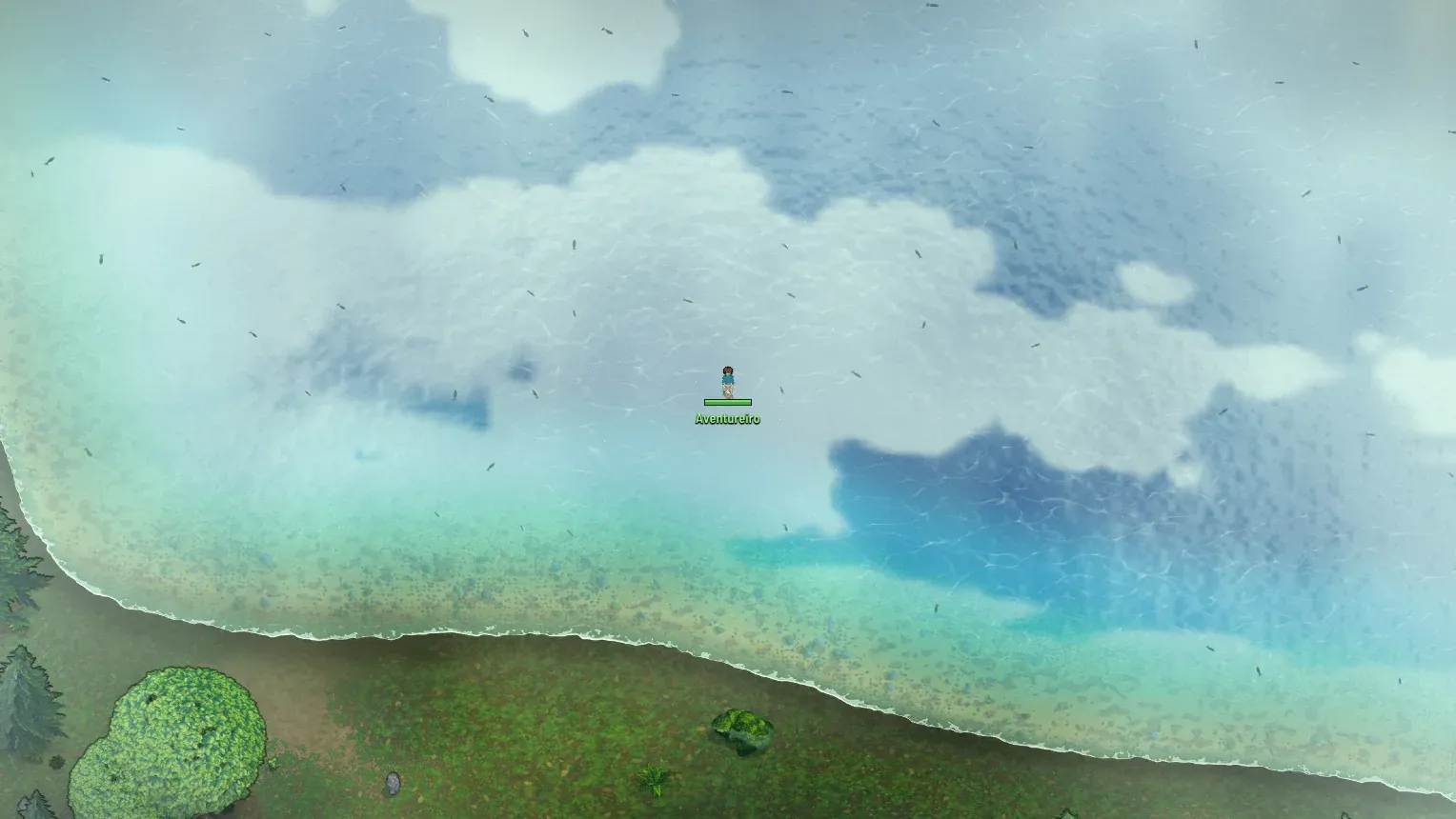
- The sky is painted: anime-style clouds, big and varied — some over a kilometer wide —, with open sky between them.
- Pine trees come in four shapes, and the forest and the water repeat their patterns less.
- The Great Gorge got dunes with curved crests and slopes you can walk on, and the canyon banks are longer.
- The fog: from high ground you now see what is below, and rivers show up through their water.
The interface
- Music and ambience on sliders, from 0 to 100% (they used to be on/off) — a player’s request on Discord.
- Edit the HUD: in Options, you can drag and resize the blocks (health and effects, party, shortcuts, gain notices) and save three profiles: default, combat and crafting.
- Pinned card: pin the card of an item or a skill to keep checking it while you do something else.
- Favorites in the backpack: the star in the corner of a slot marks the item, and favorites and recent filters join the old ones. Dropping or dismantling a favorite asks for confirmation with a warning.
- Party: you can follow an ally to highlight them on the HUD, and choose to see only the effects that matter or all of them.
- Reading: text size, window background, high contrast, symbols besides color, less interface motion and a confirmation sound (off by default).
- Crafting: the Craft window only says it worked once the server confirms, and the result goes into your history.
- Evolving: the specialization only unlocks after you spend all your job points — before, anyone evolving with saved points lost them (reported by a founder on Discord).
Some of these new interface labels are still in Portuguese in the English game; the translation comes in a coming update.
Founders and the website
- The name on the stone: a founder can choose, once, the name engraved on the Marker of Oaths.
- The founders’ stone is also on the website, on the Ultra Alpha page and on the home page.
- Ultra Alpha by card and by boleto, besides Pix, which is still the main option.
Coming up
- The bag window: a player’s request on Discord — open a bag on the ground and choose what to take, item by item. It is done and comes in the next update, together with another change: a stack too heavy for your backpack now comes in part, instead of staying whole on the ground.
- Hypothermia: also a player’s suggestion — a cold status that builds up and freezes. We are settling the numbers.
- Player villages: founded with a rare crystal, with walls, plots and roles. Still on paper.
- 3D weapons and tools in the character’s hand, starting with the axe.
Found something odd? F9 sends the report straight to the team — or tell us on the forum and on Discord. A good part of this devlog started with a message from you.
See you in the next devlog!
Enjoying the journey? The game is made with no shop and no ads.
Support the project